Micro-Mobility Rider Certification concept showing an educated e-bike or e-scooter rider prepared for safer travel.

The One Simple Idea That Could Transform Micro-Mobility Safety

Micro-Mobility Rider Certification is a practical way to prepare people before they enter traffic. It can teach riders how to see hazards, control their vehicles and make safer choices. In addition, the program could reward riders for completing useful safety lessons.

Mantis Motion Labs Safety Perspective

Micro-Mobility Rider Certification: Certify the Rider, Not Just the Ride

A voluntary education model for safer, smarter and more confident riders.

E-bikes, e-scooters and bicycles are changing how people move through cities. They are quick, useful and often affordable. However, easy access does not always include basic rider training.

Most safety plans focus on the vehicle. For example, companies improve brakes, lights, batteries and warning systems. Cities also build bike lanes and add signs. Those steps help. Still, the rider must decide how to react in traffic.

Therefore, Mantis Motion Labs is exploring a voluntary education model. The goal is simple. Riders would learn key safety skills, review common road situations and earn proof of completion.
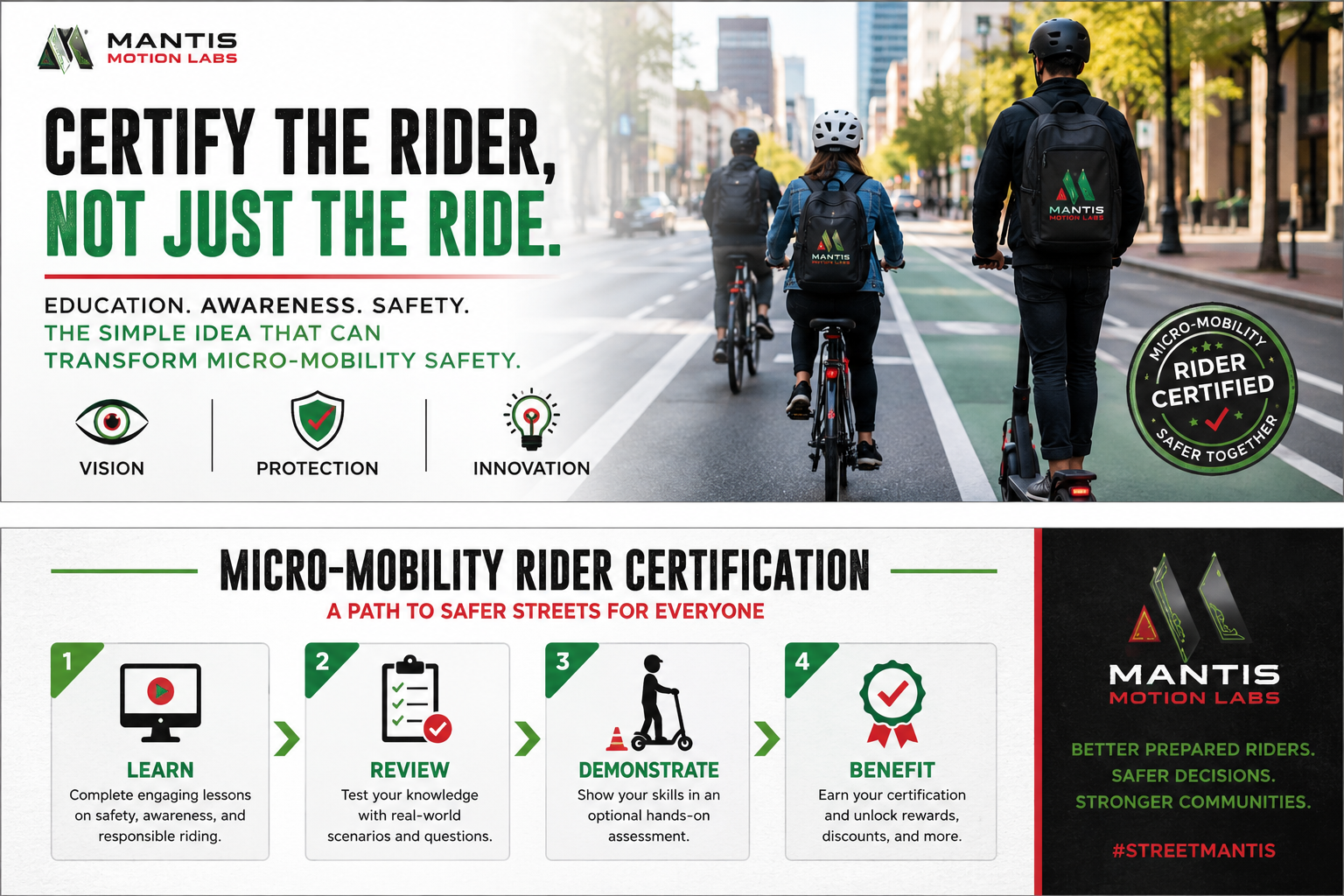
Micro-Mobility Rider Certification education and safety concept
Certify the rider, not just the ride: a rider-centered approach to education, awareness and safer streets.
The vehicle may carry the rider. However, the rider still makes each choice. Better choices can begin with better preparation.

The Missing Piece in Micro-Mobility Rider Certification

A person can unlock a shared e-scooter in minutes. Likewise, a new e-bike owner can leave a store and enter traffic on the same day. That convenience is valuable. Yet many riders have never received clear guidance.

As a result, people often learn through trial and error. Some copy other riders. Others use habits learned while driving a car. Unfortunately, those habits may not fit a smaller or faster vehicle.

Equipment cannot make every choice

A helmet can help protect a rider’s head. Lights can improve visibility. Mirrors can show traffic from behind. Even so, equipment cannot choose when to brake or turn.

Rider education fills that gap. For instance, a short lesson can show when to scan behind. A practice session can also show how speed changes stopping distance.

Public safety guidance already exists

The National Highway Traffic Safety Administration shares guidance for bicyclists and drivers. In addition, the U.S. Consumer Product Safety Commission provides information about e-bikes, e-scooters and related products.

Those resources are helpful. However, many riders may not search for them before a trip. Micro-Mobility Rider Certification could place the most useful lessons in one clear program.

Mantis Insight

Education should feel useful, not punishing. It should improve confidence, awareness and control.

Education Is a Practical Safety Feature

Vehicle technology will continue to improve. Sensors may detect nearby traffic. Apps may send alerts. Wearable devices may also warn riders about danger.

However, the rider must understand each warning. Therefore, education and technology should work together.

Knowledge supports faster decisions

Streets can change without warning. For example, a car door may open. A delivery truck may block a lane. Another rider may pass too closely.

In each case, the rider has little time to react. Training can make that response easier. First, riders can learn to scan farther ahead. Next, they can practice safe braking. Finally, they can learn how to choose a safer path.

Communication lowers confusion

Riders often share narrow spaces with other people. Therefore, clear signals matter. Hand signals, bells and voice cues can show what a rider plans to do.

Rear awareness matters too. Before moving left or right, a rider should know what is behind them. Mirrors can help. However, riders still need to know when to look and how to hold a steady path.
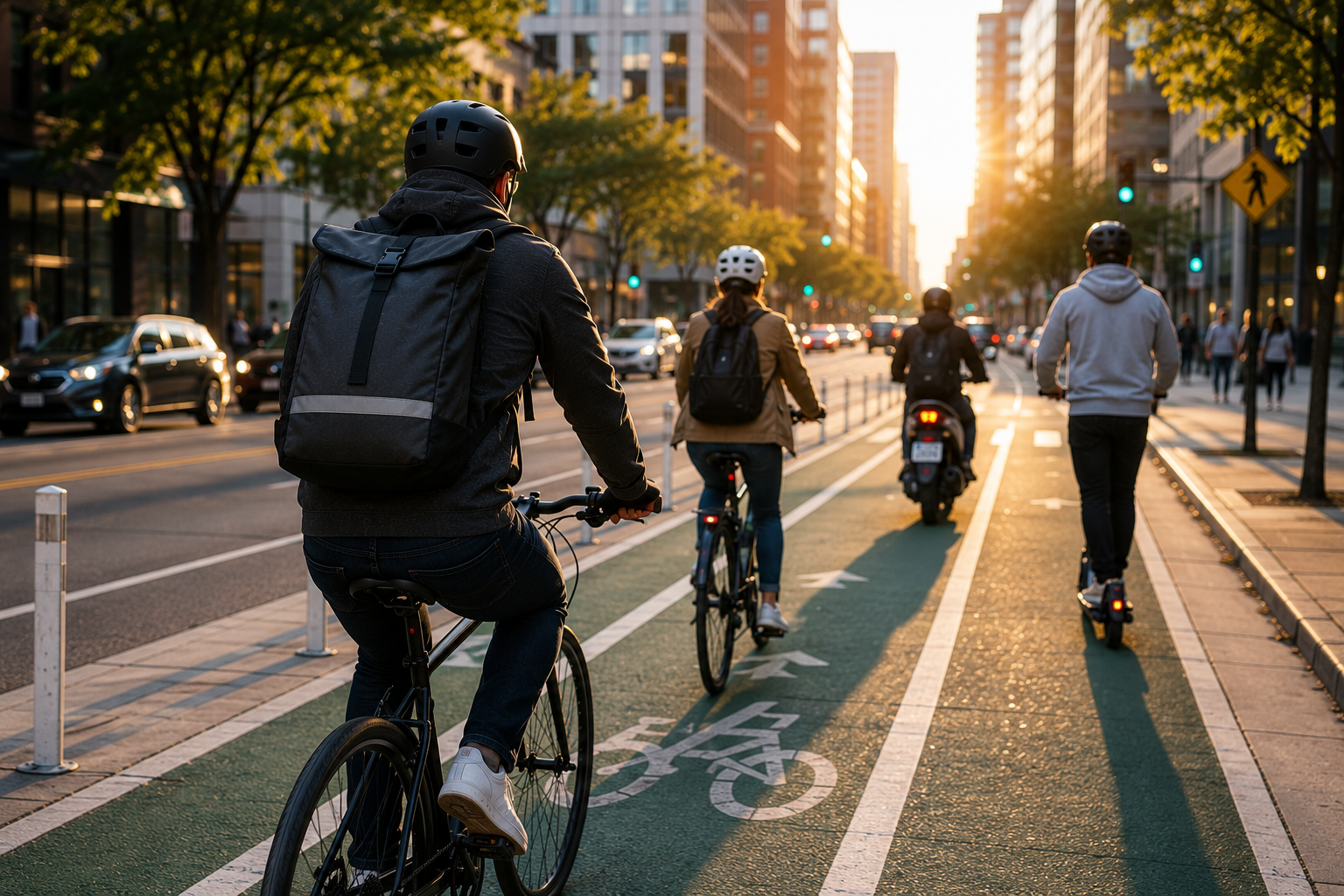
Bicycle, e-bike and e-scooter riders commuting on a city street
Riders share busy urban spaces where visibility, communication and predictable movement are essential.

Four core safety areas

Visibility

Riders learn how lighting, clothing, road position and mirrors can help them see and be seen.

Protection

Participants review helmets, braking, speed control and basic vehicle checks.

Communication

The program covers turns, passing, lane changes and shared-path signals.

Innovation

Riders learn how technology can support awareness without replacing judgment.

How Micro-Mobility Rider Certification Could Work

The program could be voluntary and easy to use. First, riders could complete short online lessons. Next, they could answer questions about common road situations.

After that, a rider could choose an in-person skills check. Finally, the rider could receive a digital record of completion.

A simple four-step process

1

Learn

Complete short lessons about equipment, visibility and safe operation.

2

Review

Answer practical questions based on real road situations.

3

Demonstrate

Show basic control, braking, signaling and awareness.

4

Benefit

Receive proof of completion and possible partner rewards.

A credential that belongs to the rider

The certification should belong to the person, not one vehicle. That point is important. A rider may own an e-bike, rent a scooter and use a shared bike while traveling.

Therefore, a portable digital credential makes sense. It could show that the rider completed a safety program. In time, apps, rental companies or insurers could choose to recognize it.

Different levels for different riders

One course may not fit everyone. For example, a new rider may need basic balance and braking lessons. Meanwhile, a daily commuter may need more training on traffic, night riding and rear awareness.

Certification Level Primary Audience Possible Topics
Rider Essentials New and occasional riders Vehicle checks, braking, helmets, signals and route awareness
Urban Rider Regular city riders Lane position, passing, blind spots and shared spaces
Advanced Rider Frequent and professional riders Night riding, weather, cargo and incident response

Why Certification Should Remain Voluntary

The word certification may sound like a license. However, that is not the idea proposed here. Micro-Mobility Rider Certification should begin as an optional program.

Education without another barrier

Many people use bicycles, e-bikes and e-scooters because they are affordable. Some riders also depend on them for work. Therefore, a required program could create extra cost or delay.

By contrast, a voluntary model can invite people to take part. It can show the value of training first. Then, participation can grow through trust and useful rewards.

Rewards can support participation

People are more likely to complete a course when they see a clear benefit. For example, partners could offer discounts on helmets, mirrors or maintenance.

In addition, rental companies could offer ride credits. Employers could help delivery workers complete the program. Universities could also include it in campus safety efforts.

Mantis Insight

Rewards can help create a culture where safer riding is respected and valued.

Who Benefits From Better-Prepared Riders?

The rider benefits first. However, the value can spread across the full transportation system. Better preparation may lead to clearer signals, steadier movement and stronger awareness.

Riders and families

New riders can gain confidence before entering traffic. Families may also feel better when a rider completes a clear safety program.

Most importantly, the lessons stay useful even when the rider changes vehicles.

Cities and transportation agencies

Cities already invest in signs, bike lanes and safety campaigns. Therefore, rider certification could support those efforts.

In addition, anonymous course results could show which topics cause the most confusion. Cities could then improve future education.

Manufacturers and rental companies

Manufacturers could explain product features more clearly. Likewise, rental companies could encourage safer first rides.

Insurers may also choose to recognize people who complete practical training. Even so, no benefit should be treated as automatic.

Technology Can Support the Certified Rider

A future platform could connect education with real safety tools. For example, an app could provide short reminders before a trip.

It could also offer route tips or refresher lessons. In addition, connected equipment could explain why a warning appeared.

Technology should support judgment

Alerts are useful when they are clear. However, too many alerts can distract the rider. Poor timing can also cause confusion.

Therefore, technology should provide simple information at the right time. The rider must remain in control.

Privacy must remain important

A digital credential should use limited data. Riders should know what is collected and why it is needed.

Furthermore, partners should ask for clear consent before viewing rider information. Safety should not require needless tracking.

Micro-Mobility Rider Certification FAQs

Is Micro-Mobility Rider Certification a driver’s license?

No. It is a voluntary education credential. Its purpose is to help riders build useful knowledge and skills.

Would certification be required before renting an e-scooter?

No. Under this model, rental companies could offer optional lessons or rewards. The program would not block access.

Would the certification apply to one vehicle?

No. The credential would belong to the rider. Therefore, the lessons could apply to owned, rented and shared vehicles.

Could experienced riders participate?

Yes. Different levels could support beginners, commuters and professional riders.

Would certification guarantee safety?

No. No course can remove every risk. However, training can help riders notice hazards and make better choices.

Certify the Rider, Not Just the Ride

Safer vehicles matter. Better roads matter too. Nevertheless, both still depend on the decisions made by riders.

Micro-Mobility Rider Certification offers a rider-centered approach. It treats education as a safety feature. In addition, it creates room for rewards, technology and future partnerships.

Ultimately, the idea is simple. Prepare riders before a difficult moment happens. As a result, they may use equipment better, communicate more clearly and make safer choices.

Help Shape the Future of Rider Safety

Mantis Motion Labs is gathering rider experiences and safety priorities. Share your views through the Rider Safety Survey. Your answers can help guide future research, education and product development.

About Mantis Motion Labs: Mantis Motion Labs explores rider-centered products, research and safety ideas for bicycles, e-bikes, e-scooters and emerging Micro-Mobility systems through the pillars of Vision, Protection and Innovation.

Welcome to Mantis Motion Labs: Smarter Solutions for Safer Streets

Today marks the official launch of Mantis Motion Labs – the home for rider-first innovation, real-world safety research, product development, and community-driven solutions for the growing micro-mobility movement.

Our mission is straightforward:

See the risks. Protect the rider. Build what comes next.

Cities are changing. E-bikes, electric scooters, delivery platforms, shared mobility services, and other emerging transportation options are becoming part of everyday life. These devices create new possibilities for affordable, flexible, and efficient travel—but they also introduce safety challenges that deserve smarter solutions.

Mantis Motion Labs was created to help meet those challenges.

Built Around Real Riders

The best safety products do not begin in a conference room. They begin with the people navigating city streets every day.

That includes:

  • E-bike commuters
  • Electric-scooter riders
  • Delivery professionals
  • Rental riders
  • Urban families
  • Safety advocates
  • Community organizations
  • Transportation and city partners

We want to understand what riders experience before, during, and after every trip. Visibility problems, blind spots, equipment limitations, traffic conflicts, poor infrastructure, nighttime riding, changing weather, and the pressure placed on delivery workers all influence rider safety.

Those experiences should help guide what gets researched, designed, tested, and built.

Vision. Protection. Innovation.

These three principles define the work of Mantis Motion Labs.

Vision means identifying risks that riders, drivers, communities, and transportation systems may overlook.

Protection means developing practical solutions that improve rider awareness, visibility, comfort, and safety.

Innovation means transforming real-world feedback into better concepts, prototypes, products, and research.

Our projects will explore ideas ranging from wearable and handlebar-mounted safety products to visibility tools, rear-view solutions, smart accessories, rider equipment, and other concepts designed around everyday micro-mobility challenges.

Your Voice Helps Shape the Mission

Mantis Motion Labs is not being built around assumptions. It is being built around feedback.

We are inviting riders, delivery workers, commuters, safety advocates, and members of the public to participate in our Micro-Mobility Rider Safety & Usage Survey.

Choose the option that works best for you.

Abbreviated Survey

A faster option for sharing your most important experiences and safety concerns.

Take the abbreviated survey:
https://forms.gle/GfSSq9iPx4B9skMx8

Complete Survey

A more detailed survey for riders who want to provide additional information about their habits, equipment, experiences, and safety priorities.

Take the complete survey:
https://forms.gle/aGdya7Zf11QN5aGdA

Every response gives us a clearer understanding of what riders need and where meaningful improvements can be made.

What You Will Find at Mantis Motion Labs

As the platform grows, visitors can expect:

  • Product concepts and prototype development
  • Rider feedback and community surveys
  • Micro-mobility safety research
  • News and crash-reporting coverage
  • Discussions about infrastructure and visibility
  • Delivery-rider safety content
  • Product-development updates
  • Opportunities for partnerships and testing
  • Resources for riders and community stakeholders

This is only the beginning.

Mantis Motion Labs will continue listening, testing, learning, and building with one goal in mind: helping make every ride smarter, more visible, and safer.

Join the Mantis Mission

Explore the site, follow our channels, complete a survey, share your experience, and help us identify the safety challenges that deserve more attention.

Together, we can create practical solutions shaped by the people who use micro-mobility every day.

Ride smarter. Stay visible. Help build what comes next.

Welcome to Mantis Motion Labs.

Vision. Protection. Innovation.

Chicago E-bike Crash & News

Chicago E-Bike Crash & News


Chicago’s transportation landscape is changing quickly. E-bikes, delivery riders, commuters, shared mobility users, and recreational riders are now part of the daily movement of the city.


As e-bike use grows, so does the need to pay closer attention to crash reports, safety updates, road conditions, infrastructure decisions, and the real risks riders face while moving through Chicago streets.


Why Chicago E-Bike Safety Matters


Chicago riders often navigate a mix of dense traffic, parked vehicles, buses, pedestrians, bike lanes, construction zones, potholes, low-light conditions, and unpredictable driver behavior.


For e-bike riders, those conditions can become even more complicated because riders may travel at higher speeds than traditional bicycles while still sharing vulnerable road space with larger vehicles.


Crash reports and local safety updates can help identify where the greatest risks are appearing and what types of improvements may be needed.


What This Feed Tracks


This Chicago E-Bike Crash & News feed monitors local reporting related to e-bike crashes, rider injuries, traffic incidents, safety concerns, policy changes, infrastructure updates, and public safety responses.


The goal is not to sensationalize crashes. The goal is to better understand the conditions that contribute to rider risk and to support a more informed conversation about safer movement.


Infrastructure, Visibility, and Awareness


E-bike safety is connected to more than rider behavior. Infrastructure design, road maintenance, lighting, signage, bike lane protection, vehicle speed, traffic enforcement, and public awareness all play a role.


Riders need safe places to move. Drivers need better awareness of smaller transportation users. Cities need data that helps them understand where crashes, near misses, and safety concerns are happening.


Mantis Motion Labs tracks these updates because real-world safety information can help guide better product ideas, stronger rider awareness, and smarter safety conversations.


Chicago as a Micro-Mobility Safety Test Case


Chicago is an important city to watch because it reflects many of the challenges facing urban riders nationwide. The city has growing bike and e-bike use, delivery rider activity, changing infrastructure, harsh seasonal road conditions, and a complex mix of transportation users.


Local reporting can help reveal patterns involving intersections, bike lanes, road hazards, delivery zones, traffic congestion, and serious rider incidents.


How This Supports the Mantis Mission


Mantis Motion Labs is focused on improving micro-mobility safety through research, awareness, product development, and rider feedback.


By following Chicago e-bike crash and safety news, Mantis Motion Labs can better understand the real conditions riders face and continue building concepts around visibility, rear awareness, signaling, wearable safety, and data-informed product direction.


Help Improve Rider Safety


Data tells a story. That story drives innovation, solutions, and safety.


Whether you ride every day, deliver for work, commute by e-bike, or simply care about safer streets, your feedback matters.


Take the Rider Safety Survey


Chicago E-Bike Crash News

Urban Micro-Mobility Landscape - Mantis Motion Labs

Revolutionizing Urban Safety: How Mantis Motion Labs is Making Micro-mobility Smarter

Understanding the Urban Micromobility Landscape

Micromobility is transforming the way we navigate urban environments. With reports showing e-scooter and e-bike usage drastically rising, the need for enhanced safety measures has never been more urgent. Mantis Motion Labs aims to address this growing demand with innovative products designed for riders.

Why Mantis Motion Labs is Essential

As cities become more congested, micromobility has gained traction, helping to replace short car trips and reducing environmental impact. Consider these statistics from recent studies:

  • 157 million trips recorded in 2023 across the U.S. and Canada.
  • Shared e-scooter trips increased by 29% from 2024 to 2025.
  • Major cities are planning to integrate micromobility into their public transport systems.

The Challenges Faced by Modern Riders

Despite the surge in popularity, micro-mobility riders face significant safety challenges:

  • Inconsistent helmet use among riders.
  • Poor visibility, especially at night.
  • Insufficient signaling options when navigating city traffic.
  • Unpredictable behavior from drivers who may not be aware of micro-mobility riders.
    Urban Micro-Mobility Issues

    Urban Rider with Micro-Mobility Statistics

Mantis Motion Labs’ Innovative Product Solutions

At the heart of Mantis Motion Labs is the Smart Safety Helmet, engineered specifically for e-scooter and e-bike riders:

  • Integrated LED turn signals for better maneuverability.
  • Rear brake lights to enhance visibility.
  • Lightweight design focused on comfort without compromising safety.
  • Weather-resistant technology for durability in various conditions.

A User-Centric Approach to Safety

What sets Mantis Motion Labs apart is their commitment to understanding rider behavior through extensive research. The company is launching initiatives like:

  • The Mantis Mobility Safety Study to gather data on rider habits and safety concerns.
  • Surveys and feedback forms that engage users to influence product design.

Target User Groups

The Smart Safety Helmet and accompanying products cater to:

  • E-scooter and e-bike riders
  • Delivery workers looking for practical safety gear
  • Rental users navigating urban streets
  • Parents investing in safety for their teens

Looking Ahead: The Future of Micromobility Safety

With plans to develop an entire product ecosystem, including signal vests and handlebar kits, Mantis Motion Labs is focused on redefining safety standards in the micromobility space.

As urban mobility continues to evolve, having a trusted safety solution is key for riders. Mantis Motion Labs stands ready to lead the charge towards safer, smarter urban travel.

Conclusion

As micromobility solutions like e-bikes and e-scooters become more prevalent, the urgency for safety enhancements escalates. Mantis Motion Labs is not just creating products; they are fostering a culture of safety and awareness. With their innovative Smart Safety Helmet and ongoing research initiatives, they are poised to make significant impacts on urban mobility and rider safety.