Micro-Mobility Rider Certification is a practical way to
prepare people before they enter traffic. It can teach riders how to see
hazards, control their vehicles and make safer choices. In addition, the
program could reward riders for completing useful safety lessons.
Mantis Motion Labs Safety Perspective
Micro-Mobility Rider Certification: Certify the Rider, Not Just the Ride
A voluntary education model for safer, smarter and more confident riders.
E-bikes, e-scooters and bicycles are changing how people move through cities.
They are quick, useful and often affordable. However, easy access does not
always include basic rider training.
Most safety plans focus on the vehicle. For example, companies improve
brakes, lights, batteries and warning systems. Cities also build bike lanes
and add signs. Those steps help. Still, the rider must decide how to react in
traffic.
Therefore, Mantis Motion Labs is exploring a voluntary education model. The
goal is simple. Riders would learn key safety skills, review common road
situations and earn proof of completion.
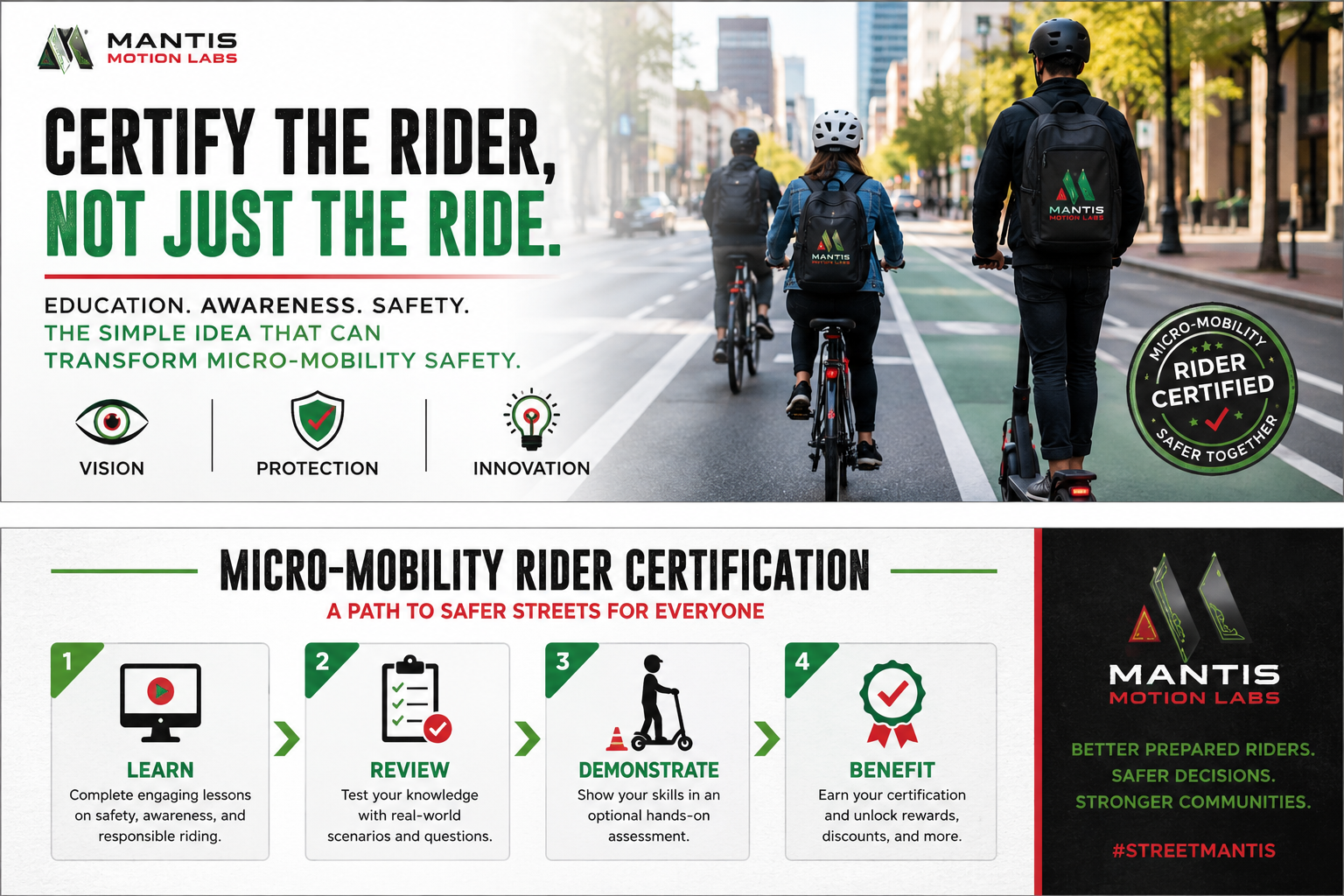 Certify the rider, not just the ride: a rider-centered approach to
education, awareness and safer streets.
Certify the rider, not just the ride: a rider-centered approach to
education, awareness and safer streets.
The vehicle may carry the rider. However, the rider still makes each choice.
Better choices can begin with better preparation.
The Missing Piece in Micro-Mobility Rider Certification
A person can unlock a shared e-scooter in minutes. Likewise, a new e-bike
owner can leave a store and enter traffic on the same day. That convenience
is valuable. Yet many riders have never received clear guidance.
As a result, people often learn through trial and error. Some copy other
riders. Others use habits learned while driving a car. Unfortunately, those
habits may not fit a smaller or faster vehicle.
Equipment cannot make every choice
A helmet can help protect a rider’s head. Lights can improve visibility.
Mirrors can show traffic from behind. Even so, equipment cannot choose when
to brake or turn.
Rider education fills that gap. For instance, a short lesson can show when
to scan behind. A practice session can also show how speed changes stopping
distance.
Public safety guidance already exists
The
National Highway Traffic Safety Administration
shares guidance for bicyclists and drivers. In addition, the
U.S. Consumer Product Safety Commission
provides information about e-bikes, e-scooters and related products.
Those resources are helpful. However, many riders may not search for them
before a trip. Micro-Mobility Rider Certification could place the most useful
lessons in one clear program.
Mantis Insight
Education should feel useful, not punishing. It should improve confidence,
awareness and control.
Education Is a Practical Safety Feature
Vehicle technology will continue to improve. Sensors may detect nearby
traffic. Apps may send alerts. Wearable devices may also warn riders about
danger.
However, the rider must understand each warning. Therefore, education and
technology should work together.
Knowledge supports faster decisions
Streets can change without warning. For example, a car door may open. A
delivery truck may block a lane. Another rider may pass too closely.
In each case, the rider has little time to react. Training can make that
response easier. First, riders can learn to scan farther ahead. Next, they
can practice safe braking. Finally, they can learn how to choose a safer
path.
Communication lowers confusion
Riders often share narrow spaces with other people. Therefore, clear signals
matter. Hand signals, bells and voice cues can show what a rider plans to do.
Rear awareness matters too. Before moving left or right, a rider should know
what is behind them. Mirrors can help. However, riders still need to know
when to look and how to hold a steady path.
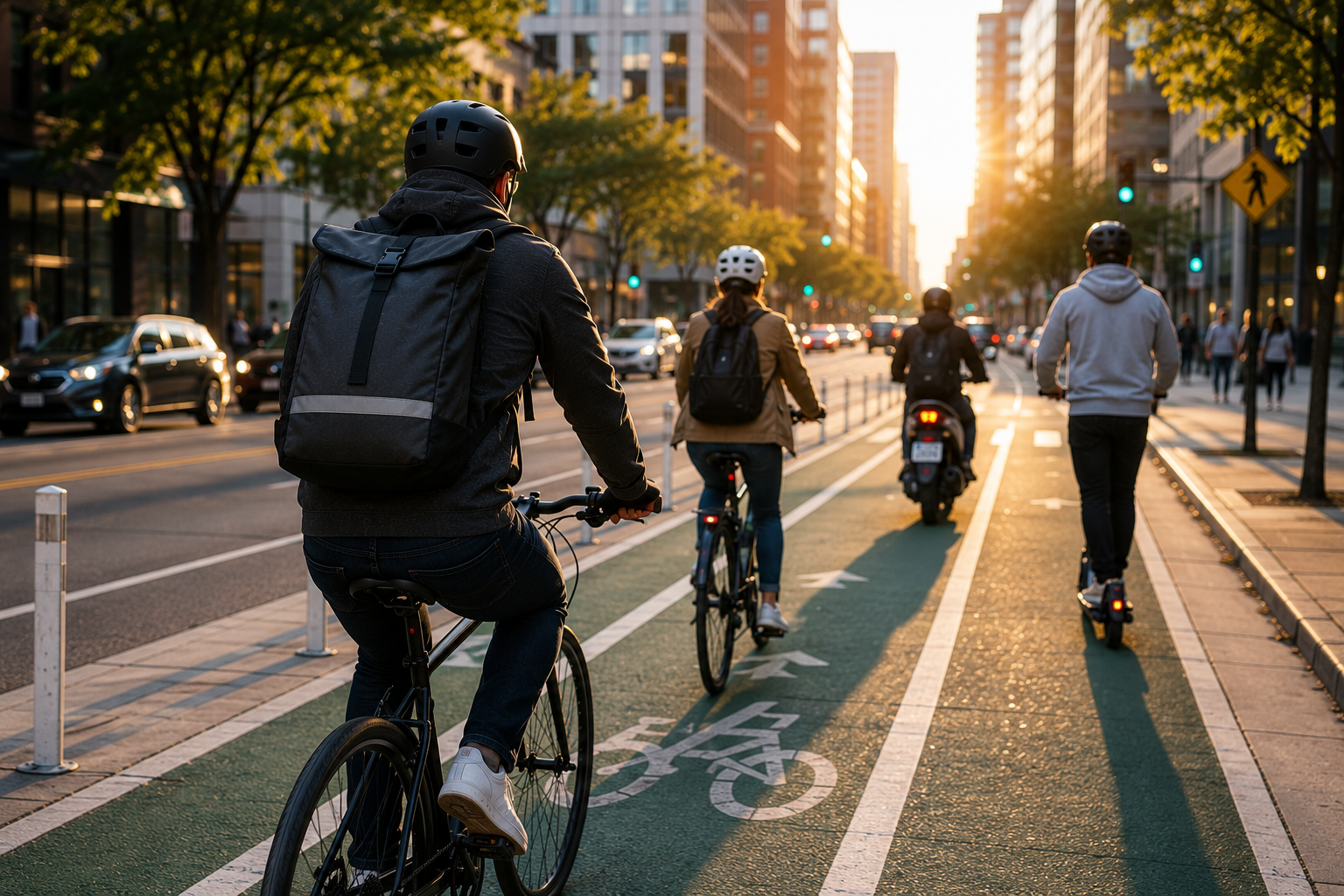 Riders share busy urban spaces where visibility, communication and
predictable movement are essential.
Riders share busy urban spaces where visibility, communication and
predictable movement are essential.
Four core safety areas
Visibility
Riders learn how lighting, clothing, road position and mirrors can help
them see and be seen.
Protection
Participants review helmets, braking, speed control and basic vehicle
checks.
Communication
The program covers turns, passing, lane changes and shared-path signals.
Innovation
Riders learn how technology can support awareness without replacing
judgment.
How Micro-Mobility Rider Certification Could Work
The program could be voluntary and easy to use. First, riders could complete
short online lessons. Next, they could answer questions about common road
situations.
After that, a rider could choose an in-person skills check. Finally, the
rider could receive a digital record of completion.
A simple four-step process
1
Learn
Complete short lessons about equipment, visibility and safe operation.
2
Review
Answer practical questions based on real road situations.
3
Demonstrate
Show basic control, braking, signaling and awareness.
4
Benefit
Receive proof of completion and possible partner rewards.
A credential that belongs to the rider
The certification should belong to the person, not one vehicle. That point
is important. A rider may own an e-bike, rent a scooter and use a shared bike
while traveling.
Therefore, a portable digital credential makes sense. It could show that the
rider completed a safety program. In time, apps, rental companies or
insurers could choose to recognize it.
Different levels for different riders
One course may not fit everyone. For example, a new rider may need basic
balance and braking lessons. Meanwhile, a daily commuter may need more
training on traffic, night riding and rear awareness.
| Certification Level |
Primary Audience |
Possible Topics |
| Rider Essentials |
New and occasional riders |
Vehicle checks, braking, helmets, signals and route awareness |
| Urban Rider |
Regular city riders |
Lane position, passing, blind spots and shared spaces |
| Advanced Rider |
Frequent and professional riders |
Night riding, weather, cargo and incident response |
Why Certification Should Remain Voluntary
The word certification may sound like a license. However, that is not the
idea proposed here. Micro-Mobility Rider Certification should begin as an
optional program.
Education without another barrier
Many people use bicycles, e-bikes and e-scooters because they are affordable.
Some riders also depend on them for work. Therefore, a required program could
create extra cost or delay.
By contrast, a voluntary model can invite people to take part. It can show
the value of training first. Then, participation can grow through trust and
useful rewards.
Rewards can support participation
People are more likely to complete a course when they see a clear benefit.
For example, partners could offer discounts on helmets, mirrors or
maintenance.
In addition, rental companies could offer ride credits. Employers could help
delivery workers complete the program. Universities could also include it in
campus safety efforts.
Mantis Insight
Rewards can help create a culture where safer riding is respected and
valued.
Who Benefits From Better-Prepared Riders?
The rider benefits first. However, the value can spread across the full
transportation system. Better preparation may lead to clearer signals,
steadier movement and stronger awareness.
Riders and families
New riders can gain confidence before entering traffic. Families may also
feel better when a rider completes a clear safety program.
Most importantly, the lessons stay useful even when the rider changes
vehicles.
Cities and transportation agencies
Cities already invest in signs, bike lanes and safety campaigns. Therefore,
rider certification could support those efforts.
In addition, anonymous course results could show which topics cause the most
confusion. Cities could then improve future education.
Manufacturers and rental companies
Manufacturers could explain product features more clearly. Likewise, rental
companies could encourage safer first rides.
Insurers may also choose to recognize people who complete practical training.
Even so, no benefit should be treated as automatic.
Technology Can Support the Certified Rider
A future platform could connect education with real safety tools. For
example, an app could provide short reminders before a trip.
It could also offer route tips or refresher lessons. In addition, connected
equipment could explain why a warning appeared.
Technology should support judgment
Alerts are useful when they are clear. However, too many alerts can distract
the rider. Poor timing can also cause confusion.
Therefore, technology should provide simple information at the right time.
The rider must remain in control.
Privacy must remain important
A digital credential should use limited data. Riders should know what is
collected and why it is needed.
Furthermore, partners should ask for clear consent before viewing rider
information. Safety should not require needless tracking.
Micro-Mobility Rider Certification FAQs
Is Micro-Mobility Rider Certification a driver’s license?
No. It is a voluntary education credential. Its purpose is to help
riders build useful knowledge and skills.
Would certification be required before renting an e-scooter?
No. Under this model, rental companies could offer optional lessons or
rewards. The program would not block access.
Would the certification apply to one vehicle?
No. The credential would belong to the rider. Therefore, the lessons
could apply to owned, rented and shared vehicles.
Could experienced riders participate?
Yes. Different levels could support beginners, commuters and
professional riders.
Would certification guarantee safety?
No. No course can remove every risk. However, training can help riders
notice hazards and make better choices.
Certify the Rider, Not Just the Ride
Safer vehicles matter. Better roads matter too. Nevertheless, both still
depend on the decisions made by riders.
Micro-Mobility Rider Certification offers a rider-centered approach. It
treats education as a safety feature. In addition, it creates room for
rewards, technology and future partnerships.
Ultimately, the idea is simple. Prepare riders before a difficult moment
happens. As a result, they may use equipment better, communicate more clearly
and make safer choices.
Help Shape the Future of Rider Safety
Mantis Motion Labs is gathering rider experiences and safety priorities.
Share your views through the Rider Safety Survey. Your answers can help
guide future research, education and product development.
